
 stars
stars exoplanets
 news
news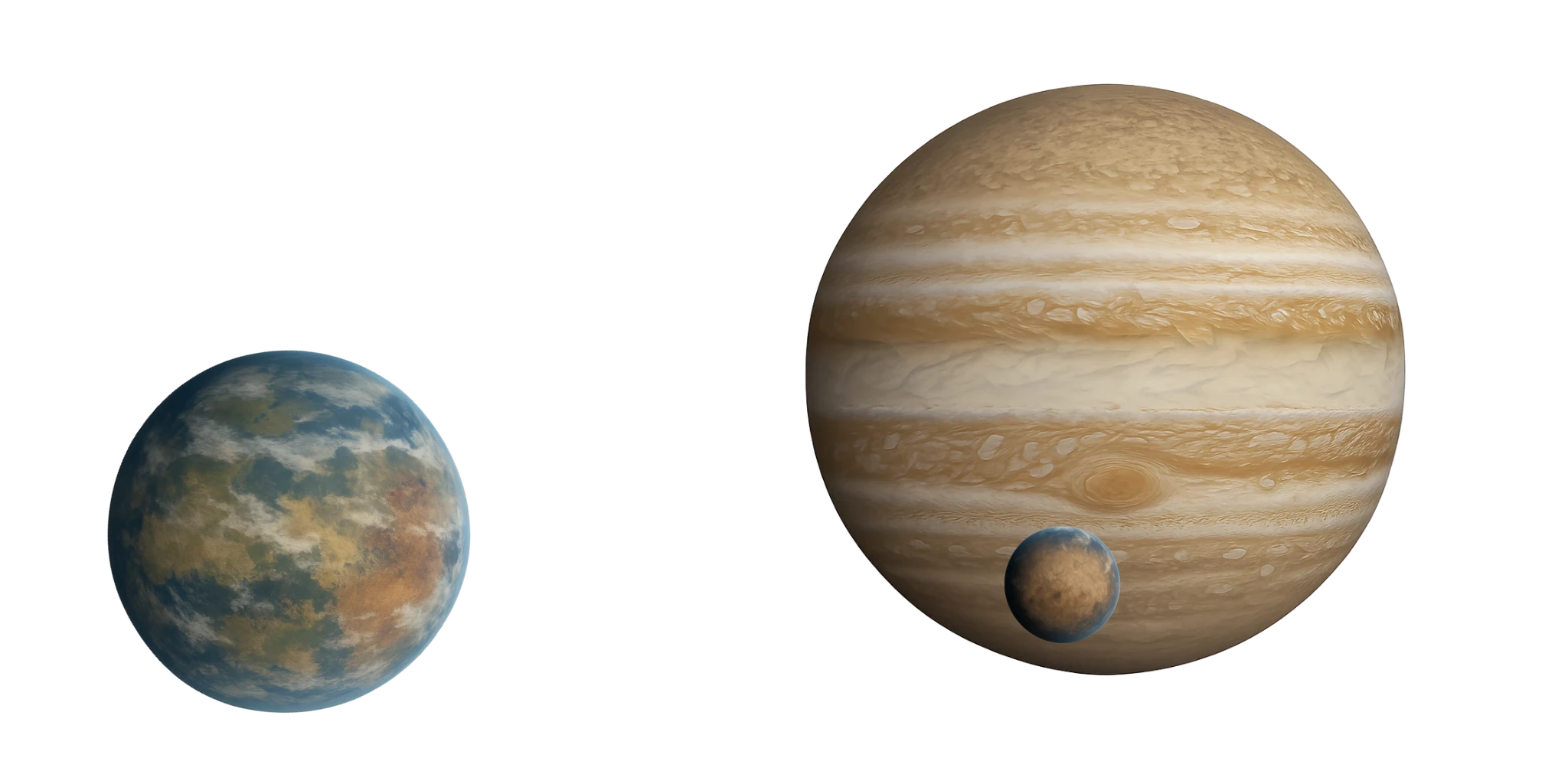
Exoplanets
Exoplanets are planets that orbit stars outside our solar system. Since the first confirmed discovery in 1992, astronomers have identified almost 6,000 exoplanets, with many more awaiting confirmation.More about Exoplanets


Habitable zone exoplanets are worlds that orbit their stars at just the right distance to allow conditions similar to those on Earth. This region, known as the habitable zone or the “goldilocks” zone, depends on how much energy a star produces. Smaller, cooler stars have habitable zones much closer in, while hotter, more luminous stars push these zones farther out.

Exoplanets in the habitable zone may have surface temperatures that allow liquid water to exist, if the atmospheric conditions are right. Liquid water is a key ingredient in the search for extraterrestrial intelligence and the broader alien life search.

However, orbiting in the habitable zone does not automatically make a planet habitable. Many habitable planets discovered so far may lack a suitable atmosphere, have extreme radiation, or be tidally locked to their stars. At the same time, liquid water can also exist outside the classic habitable zone, for example beneath the icy surface of moons like Europa.
| Exoplanet | Discovery |
Mass |
Distance (Light Years) |
|
|---|---|---|---|---|
| Proxima Centauri b | 2016 | 1.2 M⊕ | 4.2 ly | |
| Lacaille 9352 d | 2020 | 6.1 M⊕ | 10.7 ly | |
| Ross 128 b | 11 / 2017 | 1.4 M⊕ | 11 ly | |
| Struve 2398 B c | 2019 | 3.5 M⊕ | 11.5 ly | |
| Gliese 1061 c | 08 / 2019 | 1.7 M⊕ | 12 ly | |
| Gliese 1061 b | 08 / 2019 | 1.5 M⊕ | 12 ly | |
| Gliese 1061 d | 08 / 2019 | 1.7 M⊕ | 12 ly | |
| Luytens Star b | 03 / 2017 | 2.2 M⊕ | 12.3 ly | |
| Teegardens star b | 06 / 2019 | 1.1 M⊕ | 12.5 ly | |
| Teegardens star c | 06 / 2019 | 1.1 M⊕ | 12.5 ly | |
| Wolf 1061 c | 2015 | 3.4 M⊕ | 14.1 ly | |
| Gliese 1002 c | 11 / 2022 | 1.4 M⊕ | 15.8 ly | |
| Gliese 1002 b | 11 / 2022 | 1.1 M⊕ | 15.8 ly | |
| Gliese 251 c | 10 / 2025 | 3.9 M⊕ | 18.2 ly | |
| 82 G. Eridani d | 2011 | 5.8 M⊕ | 19.7 ly | |
| 82 G. Eridani f | 2017 | 10.3 M⊕ | 19.7 ly | |
| Gliese 555 b | 02 / 2023 | 5.5 M⊕ | 20.4 ly | |
| Gliese 625 b | 05 / 2017 | 2.8 M⊕ | 21.1 ly | |
| Gliese 667 C e | 2013 | 2.7 M⊕ | 23.6 ly | |
| Gliese 667 C f | 2013 | 2.7 M⊕ | 23.6 ly | |
 StellarGuide: Exoplanets
Exoplanets are planets that orbit stars outside our solar system. Since the first confirmed discovery in 1992, astronomers have identified almost 6,000 exoplanets, with many more awaiting confirmation.More about Exoplanets