
 hvězdy
 exoplanety
 zprávy


Projděte si nejnovější vědecké studie o hvězdách a exoplanetách v naší galaxii. Objevte nejnovější výzkumy astrofyziky a hvězdné astronomie.
Aktuální výzkum

Další výzkum
| Název hvězdy | Mass | Distance | ||
|---|---|---|---|---|
|
|
UPM J0641+1226 | - | 64.8 ly | |
|
|
G 161-74 B | - | 64.8 ly | |
|
|
LP 410-38 | sdM6e | - | 64.8 ly |
|
|
2MASSI J0019457+521317 | M9 | - | 64.8 ly |
|
|
PM J18265-1923 | - | 64.9 ly | |
|
|
APMPM J2359-6246 | M6Ve | - | 64.9 ly |
|
|
PM J11422-0121 | M3 | - | 64.9 ly |
|
|
LP 634-16 | M2V | - | 64.9 ly |
|
|
SCR J2135-5325 | - | 64.9 ly | |
|
|
G 141-46 2MASS J18532537+0250490, NLTT 47140, TIC 226747483, USNO-B1.0 0928-00530902 |
M2.5Ve | - | 64.9 ly |
|
|
SCR J1157-0149 | - | 64.9 ly | |
|
|
LP 789-23 | M7.5Ve | - | 65 ly |
|
|
LSPM J2012+0112 | M6V | - | 65 ly |
|
|
G 29-73 | M3V | - | 65 ly |
|
|
LP 609-24 | M7e | - | 65.1 ly |
|
|
G 10-17 | M3.5V | - | 65.1 ly |
|
|
LSPM J0704+1657 | M4.0 | - | 65.1 ly |
|
|
G 272-25 | - | 65.1 ly | |
|
|
2MASS J1159-3634 2MASS J11592585-3634495 |
- | 65.1 ly | |
|
|
UCAC4 173-170060 | - | 65.1 ly | |
 Research in Červení trpaslíci
 StellarGuide: Hvězdy
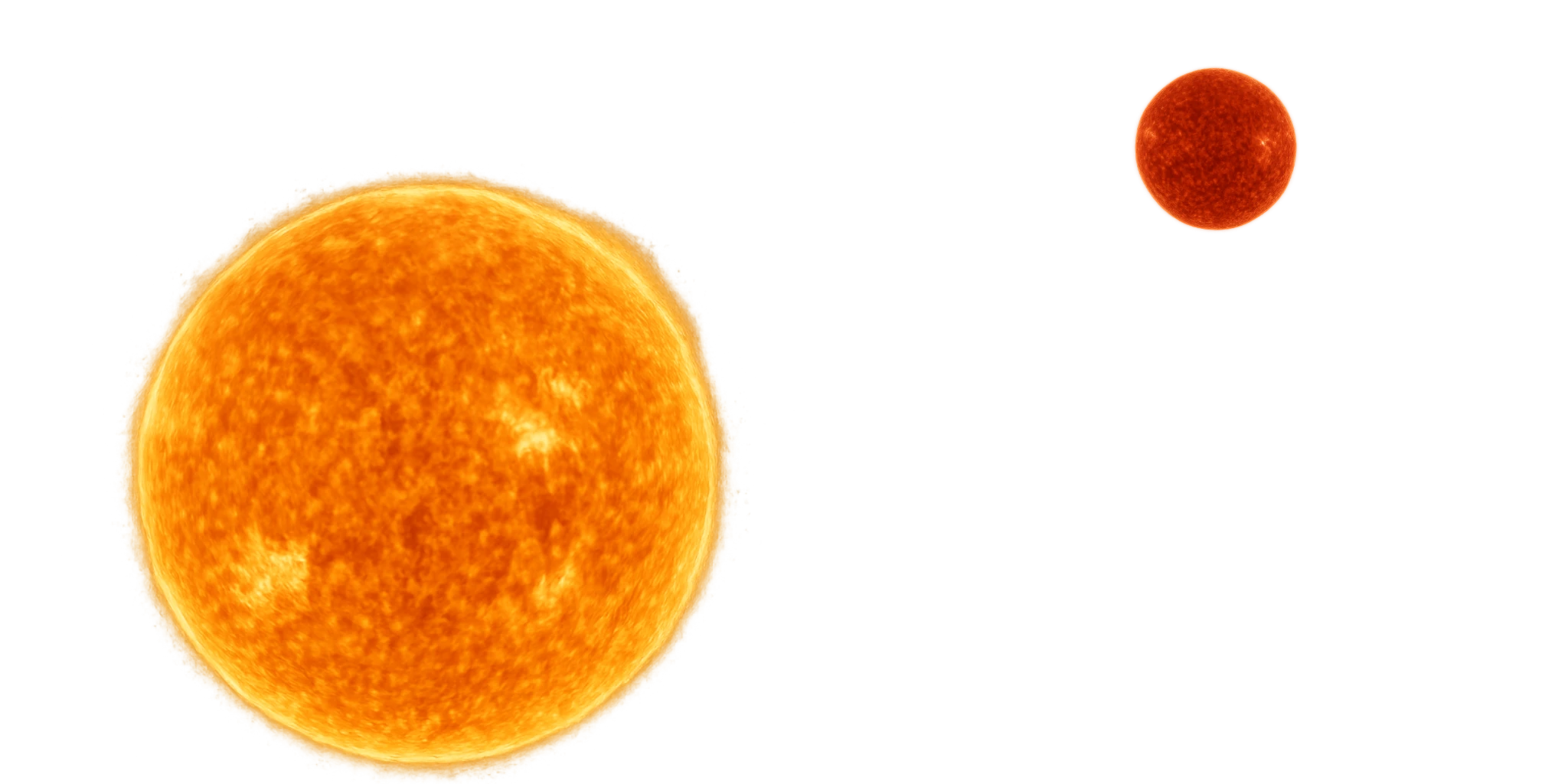
Hvězdy jsou obrovské koule horkého plynu, které září díky energii vznikající jadernou fúzí v jejich jádru. Většina hvězd se skládá převážně z vodíku a helia. V centru hvězdy dochází díky vysokému tlaku a teplotě k přeměně vodíku na helium, přičemž se uvolňuje obrovské množství energie ve formě světla a tepla.More about Hvězdy
