do not follow here
Stellar Catalog more icon Звездный каталог more icon
Оранжевые карлики
more icon
Filter stellar categories
Recommended categories

Список Оранжевые карлики

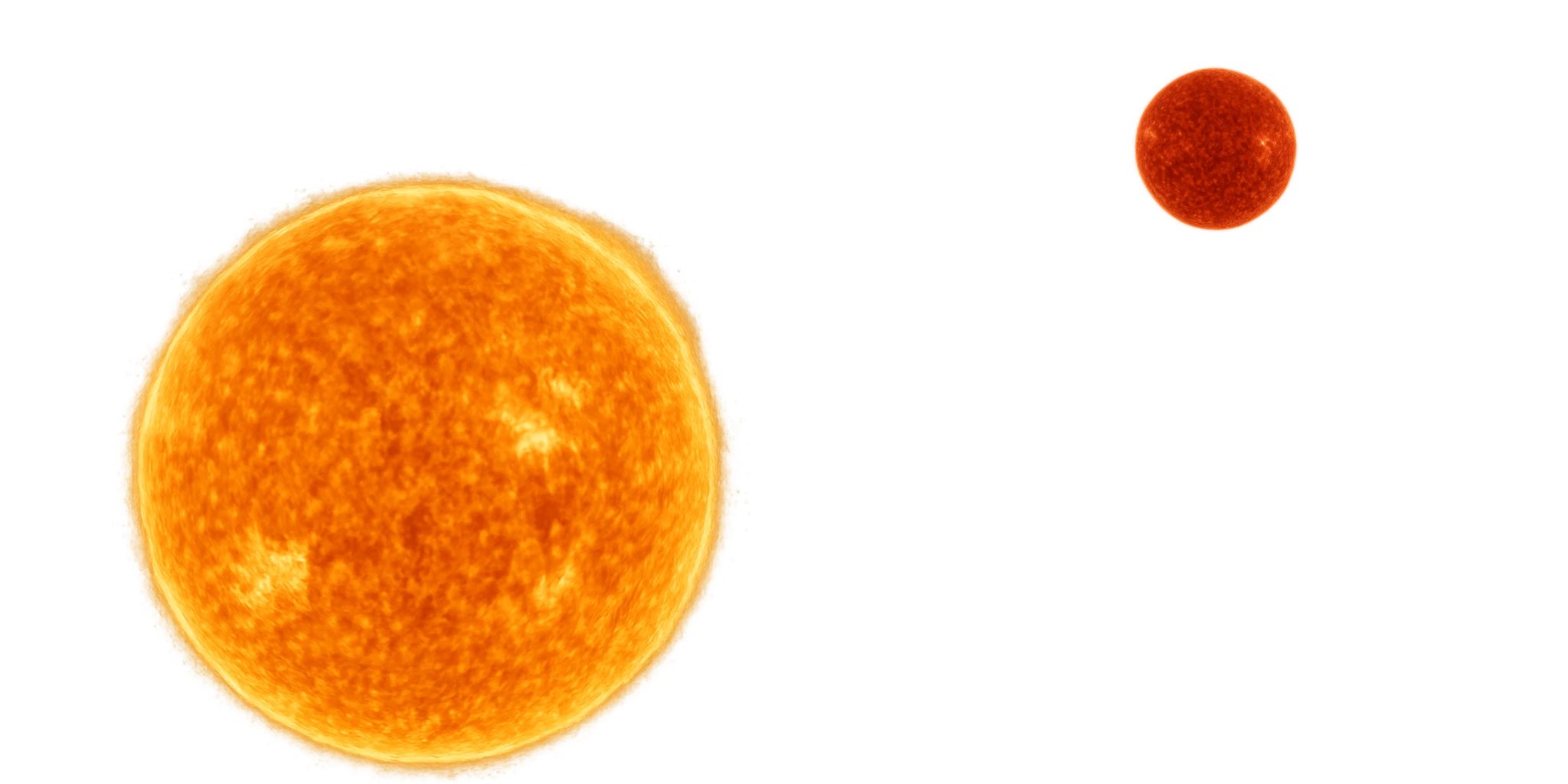
        Oранжевый карлик
    
Больше о Оранжевый карлик
Advertisement
<< <
Звезды 181-200
>
Имя звезды Mass Distance

HD 130992
LHS 383, GJ 565, Gliese 565, HIP 72688, 2MASS J14514057-2418142, CE 498, TYC 6747-1787-1
K3.5V - 54.7 ly

HD 121271
- 54.9 ly

HD 193202
K7V - 54.9 ly

HD 48948
K3V - 54.9 ly

HD 221354
HIP 116085, Gliese 895.4, GJ 895.4
K0V - 54.9 ly

HD 174080
K0 - 55.1 ly

HD 224953
HIP 169, Gliese 1294, GJ 1294, TYC-9134-1714-2, Gaia EDR3 4706564427272810624
K5.0 - 55.3 ly

HD 7924
BD+75°58, GJ 56.5, Gliese 56.5, GJ 9054, Gliese 9054, HD 7924, HIC 6379, HIP 6379, SAO 4386, PPM 4675, TIC 468723402, TYC 4494-1346-1, GCRV 766, GSC 04494-01396, 2MASS J01215911+7642372
K0.5V C 0.81 M☉ 55.5 ly

HD 53705 B
HIP 34069, HR 2668, HD 53706
K0.5V 0.81 M☉ 55.6 ly

HD 65583
K0V_Fe-1.3 - 55.7 ly

BD+45 4378
K7V - 55.8 ly

LP 417-212
K7V - 56 ly

HD 124642
K3.5V - 56.2 ly

BD+16 502
K6V - 56.2 ly

HD 34673 B
K7V - 56.3 ly

HD 47752
K3.5V - 56.3 ly

HD 79969
K3V - 56.3 ly

HD 67199
GJ 3476, Gliese 3476, HIC 39342, HIP 39342, LTT 3046, 2MASS J08023117-6601153, TIC 306735869, TYC 8936-1497-1, NLTT 18903
K2Vk: - 56.4 ly

HD 94765
K0V - 56.4 ly

HD 53705 C
HIP 34052, HD 53680
K6V 0.79 M☉ 56.4 ly
<< <
Звезды 181-200
>
Загрузить все звезды
в каталоге

Оранжевый карлик Новости

Sub-Neptune planet candidate observed orbiting the orange dwarf star TIC 402710280
iconYesterday
iconЗвезды | Экзопланеты | Оранжевый карлик
Image: Sub-Neptune planet candidate observed orbiting the orange dwarf star TIC 402710280
A potential sub-Neptune planet candidate has been identified orbiting the orange dwarf star TIC 402710280. This star, located about 218 light-years away, was monitored using the Transiting Exoplanet Survey Satellite. A sub-Neptune is a type of planet that is larger than Earth but smaller than Neptune, representing one of the most common types of worlds found in our galaxy. This specific candidate completes a full trip around its host star in approximately 36.34 days. The planet was identified...
Read article tag icon
Advertisement
Oscillation patterns in Gliese 570 A and Gliese 783 A reveal new stellar physics
icon18. 10. 2026
iconЗвезды | Оранжевый карлик
Image: Oscillation patterns in Gliese 570 A and Gliese 783 A reveal new stellar physics
New measurements of orange dwarfs Gliese 570 A and Gliese 783 A reveal stellar oscillation patterns that challenge current convection models. The observed vibration strengths are steeper than theory predicts, pointing to gaps in our understanding of stellar physics....
Read article tag icon
Massive brown dwarf HD 203771 b confirmed in eccentric orbit around orange dwarf
icon14. 10. 2026
iconЗвезды | Экзопланеты | Оранжевый карлик | Коричневые карлики
Image: Massive brown dwarf HD 203771 b confirmed in eccentric orbit around orange dwarf
Massive brown dwarf HD 203771 b confirmed in an eccentric orbit around an orange dwarf star. New mass measurements place the companion at approximately 70 times the mass of Jupiter, revealing insights into how brown dwarfs migrate inward over time....
Read article tag icon

study iconResearch in Оранжевые карлики

line

Frequently Asked Questions about nearby stars

What is the nearest star?

Nearest star is Proxima Centauri, located approximately 4.24 light-years (1.30 parsecs) from the Sun. It is part of the Alpha Centauri star system, which also includes Alpha Centauri A and Alpha Centauri B.

What are the nearest stars to Earth?

Nearest stars to Earth include the Alpha Centauri system (Alpha Centauri A, Alpha Centauri B, and Proxima Centauri), Barnard's Star, and Wolf 359. There are also brown dwarfs Luhman 16 and WISE 0855−0714.

What is the solar neighborhood?

Solar neighborhood (also Local Interstellar Cloud) is the region of interstellar space that surrounds the Sun with diameter about 15 light years. Stellar Catalog database includes all stars contained within this region.

How do astronomers measure distances to stars?

Astronomers use methods like parallax, standard candles, and redshift to measure distances to stars. Parallax is especially useful for nearby stars in our solar neighborhood, while other techniques help map the universe beyond.

Are there any exoplanets orbiting the nearest stars?

Yes, several exoplanets have been discovered orbiting the nearest stars. For example, Proxima Centauri has an exoplanet called Proxima Centauri b, which is located in the star's habitable zone and is the closest known exoplanet to Earth.

Why are the nearest stars important for astronomy and physics?

The nearest stars provide valuable laboratories for studying stellar evolution, space environments, and the fundamental physics of stars. Observing these stars helps astronomers understand the structure of our galaxy and the broader universe.
Advertisement

exoplanet iconStellarGuide: Звезды

line
Звезды
Звёзды — это огромные шары раскалённого газа, которые светятся благодаря выработке энергии в процессе ядерного синтеза в их ядрах. Большинство звёзд состоит в основном из водорода и гелия. В центре звезды из-за высокого давления и температуры атомы водорода сливаются в гелий, высвобождая огромное количество энергии в виде света и тепла.
More about Звезды tag icon

Advertisement