The T16 project analyzed light curves from the TESS space telescope's first cycle, focusing on stars as faint as 16th magnitude. By using advanced data processing and machine learning, the team searched for transiting exoplanets in over 83 million light curves. This large-scale search resulted in the identification of 11,554 planet candidates, including 10,091 that are new discoveries. The candidates have orbital periods between half a day and 27 days, and 411 are single-transit events where the orbital period could not be determined.

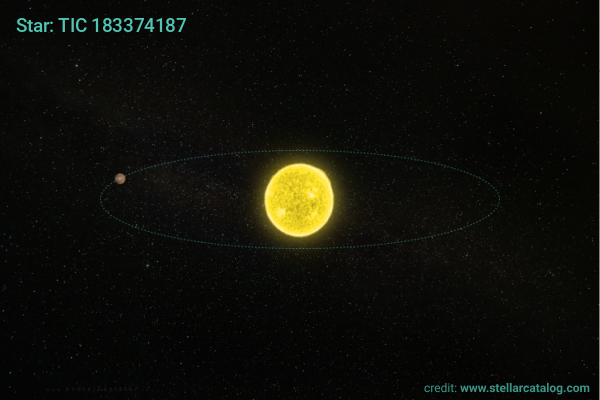
To validate their methods, the team used ground-based radial velocity measurements to confirm one of the candidates, TIC 183374187, as a hot Jupiter orbiting a metal-poor, thick-disk star. This confirmation demonstrates the reliability of the T16 pipeline for finding real planets, even around faint stars. The results more than double the number of known TESS planet candidates and provide a valuable set of targets for future studies and follow-up observations.

These findings show that large, machine learning-assisted searches of TESS data can greatly expand our knowledge of exoplanets, especially around stars that are too faint for previous surveys.

Key findings
- Over 10,000 new planet candidates found in TESS Cycle 1 data
- 411 are single-transit events with unknown periods
- TIC 183374187 confirmed as a hot Jupiter by ground-based follow-up
- Machine learning enables sensitive searches around faint stars
- The number of known TESS planet candidates has more than doubled
Stars mentioned

 stars
stars exoplanets
 news
news


 21. 4. 2026


