
 stars
 exoplanets
 news


Browse the latest scientific studies on stars and exoplanets in our galaxy. Stellar Catalog provides access to scientific data from astrophysics and stellar or planetary astronomy. It's a resource for anyone interested in the newest discoveries about what lies beyond our solar system.
Improved analysis technique refines carbon to oxygen ratios for brown dwarfs
 9. 11. 2026
Researchers have developed a new computational method to better determine the ratio of carbon to oxygen in the atmospheres of brown dwarfs. By accounting for uncertainties in how light interacts with molecules, this technique provides more accurate chemical measurements. The study successfully applied this approach to 14 late-T and Y type brown dwarfs, including the benchmark object 2MASS J0415-0935.
Star system: 2MASS 0415-0935 | Distance from the Sun: 18.7 light years
Determining the chemical makeup of brown dwarf atmospheres is often complicated by how different molecular models interpret light data. These models, known as line lists, can produce slightly different results, leading to significant uncertainties when estimating the ratio of carbon to oxygen. By incorporating these uncertainties directly into the simulation process through a technique called amortized opacity marginalization, analysts can now produce more reliable chemical measurements that better account for existing gaps in scientific data. To measure these ratios, analysts used a neural posterior estimator, which is a type of machine learning tool designed to learn patterns from complex data. By randomizing how light interacts with simulated atmospheric particles during the training phase, the model learns to provide a stable result that is less sensitive to errors in specific molecular databases. This process was further improved by training the model to handle imperfect data, such as bad pixels often found in images captured by the JWST telescope. This method was tested on 14 late-T and Y dwarfs, which are types of substellar objects that form like stars but lack the mass to ignite hydrogen. For the T8 benchmark brown dwarf 2MASS J0415-0935, the new approach provided a carbon to oxygen ratio of 0.53. This result aligns with previous studies, whereas traditional methods that do not account for opacity variations often failed to include this expected value in their findings.Key findings
- A new computational method accounts for molecular data inconsistencies to improve chemical accuracy.
- The technique significantly reduces errors caused by reliance on a single, potentially flawed molecular model.
- Machine learning models were successfully adapted to handle missing or corrupt data from space telescopes.
- Analysis of 14 late-T and Y dwarfs returned carbon to oxygen ratios ranging from 0.24 to 0.62.
- The benchmark brown dwarf 2MASS J0415-0935 yielded a carbon to oxygen ratio of 0.53 using this improved technique.
Generated by LLM, corrected by human
Related themes
Stars mentioned
T8, Brown dwarf
2MASS J0415-0935 is a T8 type brown dwarf located approximately 18.7 light-years from the Sun. It has a mass of 0.0353 solar masses and a radius of 0.095 solar radii, with an atmospheric temperature of 729 Kelvin.
mass: 0.04 M☉
radius: 0.06 R☉
distance: 18.7 ly
stars in the system: 1
exoplanets: 0
Advertisement
Related articles
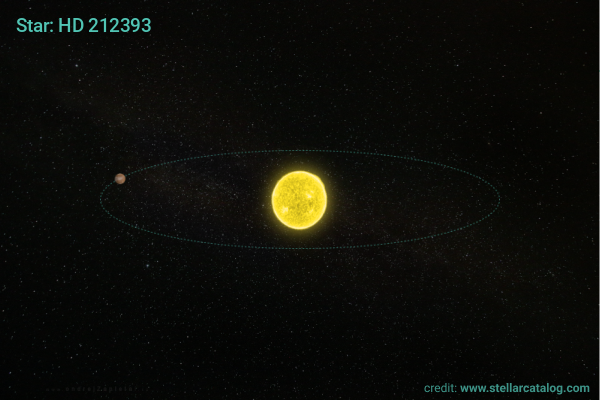
TIC 164173105 features in a comparison of methods for tracking stellar changes
26. 11. 2026
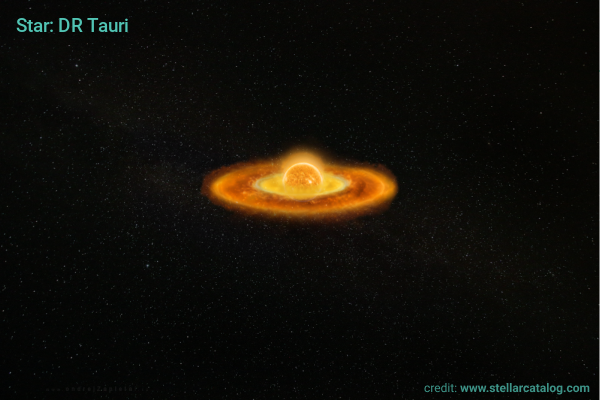
 Two compact features in DR Tau's disk are consistent with orbital motion
23. 11. 2026
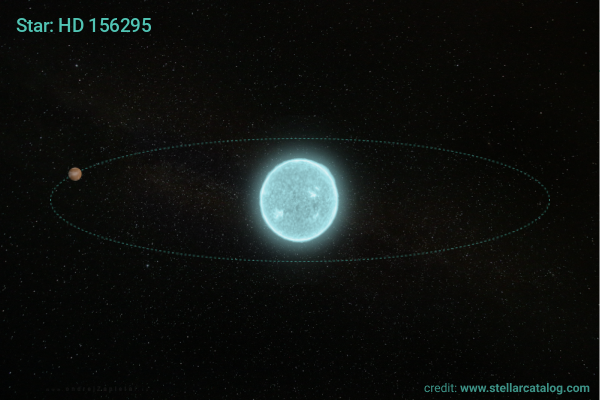
 HD 156295 b may be a massive planet in a habitable zone
2. 11. 2026
26. 11. 2026The W Transform offers a way to track how stars’ brightness changes over time. Tests on simulated data and observations of six stars from TESS found that it often agrees with the established Continuous Wavelet Transform. When light curves h...
Read article
23. 11. 2026Two compact features in the planet-forming disk around the young star DR Tau remained stable over seven years, and their motion matches the pattern expected for orbiting material. One feature may mark the location of a planetary-mass object...
Read article
2. 11. 2026HD 156295 b is a candidate planet with an estimated mass of 6.3 times Jupiter’s. Its orbit may place it in the star’s habitable zone, where temperatures could allow liquid water under suitable conditions. The candidate emerged from timing c...
Read article
 Research for the same star

Advertisement
Research with similar tags
Browse the latest scientific studies on stars and exoplanets in our galaxy. Stellar Catalog provides access to scientific data from astrophysics and stellar or planetary astronomy. It's a resource for anyone interested in the newest discoveries about what lies beyond our solar system.
Latest discoveries
More research
Advertisement