Outer giant planets play a critical role in the development of planetary systems, yet their long orbital paths make them challenging to observe through traditional methods. By analyzing astrometric data from the Hipparcos and Gaia space missions, researchers have identified 29 candidate planets located far from their host stars. These findings suggest the presence of massive companions orbiting beyond the previously known planets in these systems.

Astrometry measures the precise positions and movements of stars in the sky. When a large planet orbits a star, it causes the star to wobble slightly due to gravitational interaction, a motion known as stellar reflex motion. By utilizing the G23H catalogue, which combines data from the Hipparcos and Gaia DR2 and DR3 missions, experts looked for this subtle wobbling to detect distant, massive objects.

The search focused on 170 host stars already known to have smaller, inner planets. By filtering for signatures indicating companions with masses between 0.3 and 13 times that of Jupiter and orbital distances greater than 8.4 astronomical units, 29 high-priority candidates were selected. An astronomical unit is the average distance between the Earth and the Sun.

In eight of these systems, researchers previously noted unusual trends in radial velocity—the measurement of a star's speed toward or away from Earth—which these new candidates could explain. Further joint analysis with future Gaia data will be required to confirm these planets and understand how they influence the evolution of their inner planetary neighbors.

Key findings
- Identified 29 candidate outer giant planets orbiting beyond known inner planets in existing systems.
- All candidates are located at median semi-major axes greater than 8.4 astronomical units.
- Predicted masses for the candidate companions range from 0.3 to 13 times the mass of Jupiter.
- Eight systems show existing radial velocity trends that may be explained by these new outer companions.
- Results establish a priority list for future monitoring and orbit analysis using upcoming Gaia mission data.
Stars mentioned
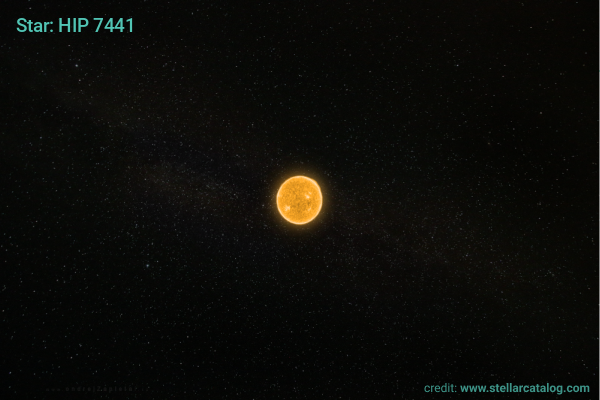
K3, Orange star
mass: 0.91 M☉
radius: 0.7 R☉
distance: 171 ly
exoplanets: 0

 stars
stars exoplanets
 news
news


 3. 10. 2026


