
 hvězdy
 exoplanety
 zprávy


Projděte si nejnovější vědecké studie o hvězdách a exoplanetách v naší galaxii. Objevte nejnovější výzkumy astrofyziky a hvězdné astronomie.
Aktuální výzkum

Další výzkum
| Název hvězdy | Mass | Distance | ||
|---|---|---|---|---|
|
|
LSPM J0738+1829 | M6V | - | 60 ly |
|
|
LSPM J1931+1906 | - | 60 ly | |
|
|
LP 822-7 | M7V | - | 60 ly |
|
|
SCR J1000-4130 | - | 60 ly | |
|
|
2MASS J0449+5138 TIC 286447344, WISEA J044904.59+513837.2, 2MASS J04490464+5138412, LSPM J0449+5138 |
- | 60 ly | |
|
|
UCAC4 440-076127 | - | 60 ly | |
|
|
G 270-164 | M3.0 | - | 60 ly |
|
|
G 167-51 | M3.5Ve | - | 60 ly |
|
|
G 139-17 | M3.97 | - | 60 ly |
|
|
LP 833-42 B | - | 60 ly | |
|
|
2MUCD 10984 | M8.5V | - | 60.1 ly |
|
|
PM J14171+0851 | M4.5V | - | 60.1 ly |
|
|
PM J18306-0356 | M4.5V | - | 60.1 ly |
|
|
G 247-39 | M3.5V | - | 60.1 ly |
|
|
PM J08293+0355E | M2.5Ve | - | 60.1 ly |
|
|
LP 331-57 | M2.0 | - | 60.1 ly |
|
|
GSC 00143-02035 | M4Ve | - | 60.1 ly |
|
|
2MASS J17312716-0759488 | - | 60.2 ly | |
|
|
PM J11240+3808 | M4.5V | - | 60.2 ly |
|
|
G 223-74 | M3.0V | - | 60.2 ly |
 Research in Červení trpaslíci
 StellarGuide: Hvězdy
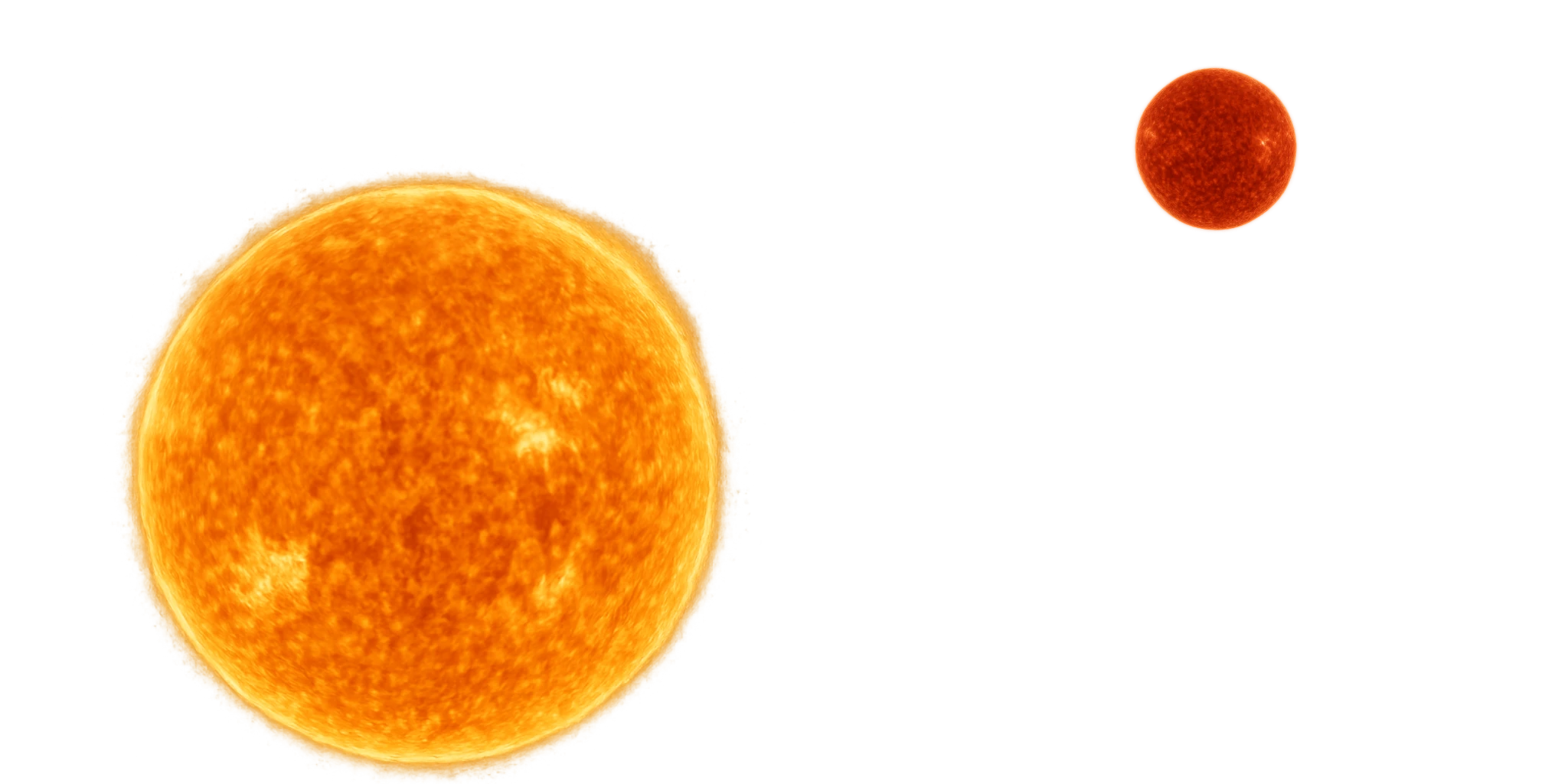
Hvězdy jsou obrovské koule horkého plynu, které září díky energii vznikající jadernou fúzí v jejich jádru. Většina hvězd se skládá převážně z vodíku a helia. V centru hvězdy dochází díky vysokému tlaku a teplotě k přeměně vodíku na helium, přičemž se uvolňuje obrovské množství energie ve formě světla a tepla.More about Hvězdy
