do not follow here
Stellar Catalog more icon Katalog blízkých hvězd more icon
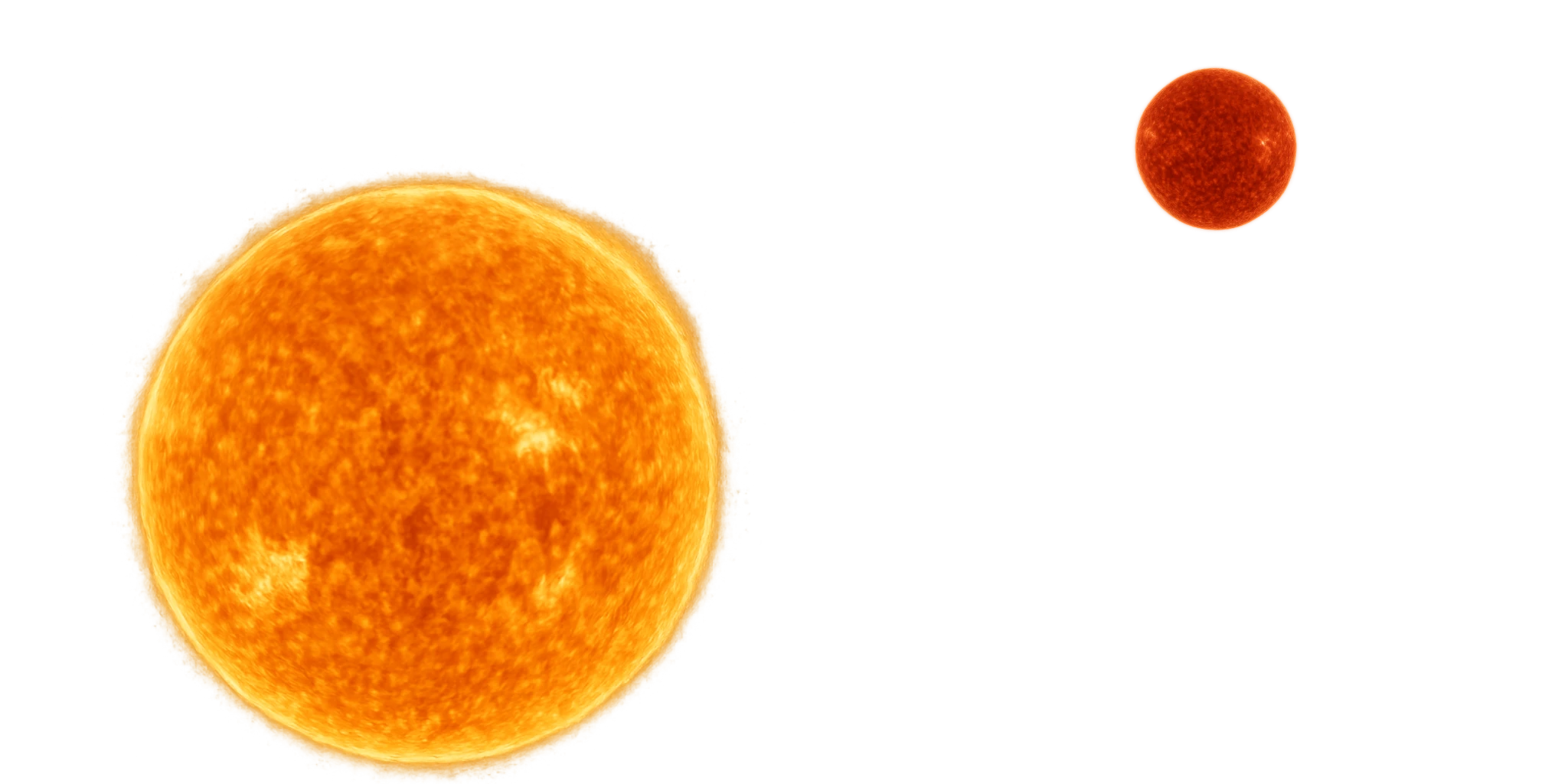
Červení trpaslíci
more icon
Filter stellar categories
Recommended categories

Seznam nejbližších Červení trpaslíci


Více o Červení trpaslíci
Advertisement
<< <
Hvězdy 1061-1080
>
Název hvězdy Mass Distance

DG Phoenix
V* DG Phe
M8.5e - 51.9 ly

Gaia DR2 5864005027836957952
- 52 ly

G 33-35 B
M3.5 - 52 ly

G 33-35
M1.5 - 52 ly

HD 107596
LHS 2548, G 123-26, G 198-46, GJ 462, Gliese 462, HIP 60303, LFT 898, 2MASS J12215407+4208018, TIC 284567512, TYC 3020-1684-1, WISEA J122154.27+420756.6, BD+42 2296
M0V - 52 ly

G 221-22
M1V - 52 ly

Wolf 1246
M3.5V - 52.1 ly

HD 275122
Wolf 1325, LHS 1528, HIP 15366, GJ 134, GL 134, Gliese 134, TYC-2848-1804-1, BD +37 748
M1.5Ve - 52.1 ly

Gliese 1135 B
- 52.1 ly

G 230-42
M4.0Ve - 52.1 ly

Gliese 676
CD–51°10924, HIC 85647, HIP 85647, LTT 6947, NLTT 44859, NSV 8846, DENIS J173011.2-513812, GJ 676 A, 2MASS J17301119-5138132, TIC 369021303, TYC 8354-785-1, WISEA J173010.92-513814.7
M0V 0.71 M☉ 52.1 ly

Gliese 676 B
LTT 6948, L 269-24
M3V 0.08 M☉ 52.1 ly

BD+46 1635 B
- 52.1 ly

StM 162
- 52.1 ly

G 264-12
LSPM J2146+6648, NLTT 52122, 2MASS J21464021+6648105, TIC 322391844, WISEA J214640.94+664812.8
M4.0V C - 52.1 ly

Gliese 777 B
LHS 3509, G 186-9, LFT 1514, LTT 15865, NLTT 48646, TIC 239481097, WISEA J200327.13+295153.9
M4.5V - 52.2 ly

G 152-50
M2.5V - 52.2 ly

LP 535-12
M6.5V - 52.2 ly

L 524-9
- 52.2 ly

G 193-81
M4V - 52.2 ly
<< <
Hvězdy 1061-1080
>
Načíst všechny hvězdy
v našem katalogu

study iconResearch in Červení trpaslíci

line

Frequently Asked Questions about nearby stars

What is the nearest star?

Nearest star is Proxima Centauri, located approximately 4.24 light-years (1.30 parsecs) from the Sun. It is part of the Alpha Centauri star system, which also includes Alpha Centauri A and Alpha Centauri B.

What are the nearest stars to Earth?

Nearest stars to Earth include the Alpha Centauri system (Alpha Centauri A, Alpha Centauri B, and Proxima Centauri), Barnard's Star, and Wolf 359. There are also brown dwarfs Luhman 16 and WISE 0855−0714.

What is the solar neighborhood?

Solar neighborhood (also Local Interstellar Cloud) is the region of interstellar space that surrounds the Sun with diameter about 15 light years. Stellar Catalog database includes all stars contained within this region.

How do astronomers measure distances to stars?

Astronomers use methods like parallax, standard candles, and redshift to measure distances to stars. Parallax is especially useful for nearby stars in our solar neighborhood, while other techniques help map the universe beyond.

Are there any exoplanets orbiting the nearest stars?

Yes, several exoplanets have been discovered orbiting the nearest stars. For example, Proxima Centauri has an exoplanet called Proxima Centauri b, which is located in the star's habitable zone and is the closest known exoplanet to Earth.

Why are the nearest stars important for astronomy and physics?

The nearest stars provide valuable laboratories for studying stellar evolution, space environments, and the fundamental physics of stars. Observing these stars helps astronomers understand the structure of our galaxy and the broader universe.
Advertisement

exoplanet iconStellarGuide: Hvězdy

line
Hvězdy
Hvězdy jsou obrovské koule horkého plynu, které září díky energii vznikající jadernou fúzí v jejich jádru. Většina hvězd se skládá převážně z vodíku a helia. V centru hvězdy dochází díky vysokému tlaku a teplotě k přeměně vodíku na helium, přičemž se uvolňuje obrovské množství energie ve formě světla a tepla.
More about Hvězdy tag icon

Advertisement